When it comes to feeding babies, every parent asks the same question:
“Is this truly safe for my child?”
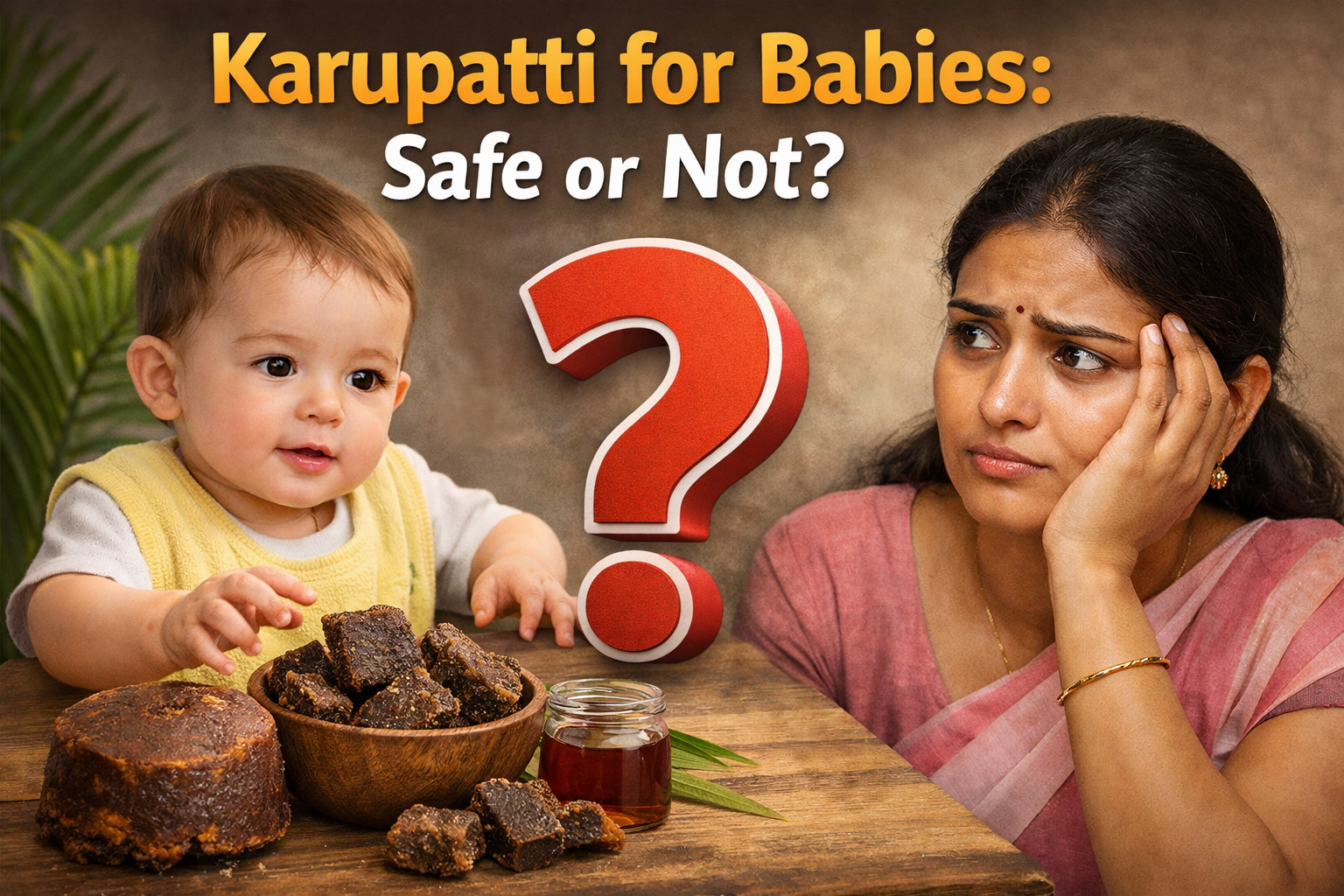
Karupatti (palm jaggery) is often praised as a healthy alternative to white sugar, rich in minerals and made using traditional methods. Many elders recommend it for strength and immunity. But does that mean karupatti is safe for babies too?
This blog gives you clear, honest answers—no myths, no exaggeration—so you can make the right decision for your baby’s health.
Table of Contents
-
What Is Karupatti?
-
Why Parents Consider Karupatti for Babies
-
Is Karupatti Safe for Babies? (Doctor-Backed View)
-
Right Age to Introduce Karupatti to Babies
-
Nutritional Value of Karupatti
-
Potential Benefits of Karupatti for Babies
-
Risks & Side Effects Parents Must Know
-
How to Safely Give Karupatti to Babies
-
Karupatti vs White Sugar for Babies
-
Final Verdict: Should You Give Karupatti to Your Baby?
1. What Is Karupatti?
Karupatti, also known as palm jaggery, is a natural sweetener made from palm tree sap. Unlike refined sugar, it is prepared using traditional methods without chemical processing.
Good quality karupatti is:
-
Dark brown or black in color
-
Free from bleaching agents
-
Rich in natural minerals
Because of this, many families consider it a healthier option—even for babies.
2. Why Parents Consider Karupatti for Babies
Parents usually search for karupatti for babies because:
-
They want to avoid white sugar
-
Elders suggest it for strength and immunity
-
It is believed to improve digestion
-
It is considered more “natural”
However, natural does not always mean baby-safe. Understanding when and how to introduce it is crucial.
3. Is Karupatti Safe for Babies? (Doctor-Backed View)
Pediatric nutrition guidelines agree on one key rule:
Babies below 1 year should not be given added sugar in any form.
This includes:
-
White sugar
-
Honey
-
Karupatti
-
Palm sugar
Why?
-
Baby digestive systems are still developing
-
Added sugars can harm gut health
-
Risk of developing early sugar dependency
👉 Conclusion:
Karupatti is NOT recommended for babies below 12 months.
4. Right Age to Introduce Karupatti to Babies
✅ 12 months and above is generally considered safe
⚠️ Only in very small quantities
⚠️ Should never replace fruits or natural foods
Always consult your pediatrician before introducing any sweetener.
5. Nutritional Value of Karupatti
Karupatti contains small amounts of:
-
Iron
-
Calcium
-
Magnesium
-
Potassium
While these minerals are beneficial, they are not high enough to treat deficiencies in babies. Breast milk, formula, and solid foods remain the primary nutrition sources.
6. Potential Benefits of Karupatti for Babies (After 1 Year)
When used correctly and sparingly, karupatti may offer:
✔ Mild Energy Boost
Provides natural carbohydrates for active toddlers.
✔ Better Than Refined Sugar
Does not contain chemical bleaching or refining agents.
✔ Traditional Digestive Support
Some parents report improved digestion when used in tiny amounts.
⚠️ These are supportive benefits, not medical treatments.
7. Risks & Side Effects Parents Must Know
This is the most important section.
❌ Risk of Overfeeding Sugar
Too much karupatti can:
-
Reduce appetite for nutritious foods
-
Create early sweet cravings
❌ Digestive Issues
Poor quality or impure karupatti may cause:
-
Stomach upset
-
Loose stools
❌ Tooth Decay
Even natural sugar can damage emerging baby teeth if overused.
8. How to Safely Give Karupatti to Babies
If your baby is 1 year or older, follow these rules:
✔ Use pure, traditionally made karupatti
✔ Dissolve a tiny pinch in warm water or food
✔ Avoid daily use
✔ Never give solid chunks
✔ Observe for allergies or discomfort
Best ways to use:
-
In homemade porridge (very small quantity)
-
Mixed with natural foods like millet or rice gruel
9. Karupatti vs White Sugar for Babies
| Aspect | Karupatti | White Sugar |
|---|---|---|
| Processing | Traditional | Highly refined |
| Minerals | Small amount | None |
| Chemicals | No (if pure) | Yes |
| Baby Safety | Only after 1 year | Not recommended |
👉 Karupatti is the better option, but moderation is key.
10. Final Verdict: Should You Give Karupatti to Your Baby?
✔ Below 1 year: ❌ No
✔ Above 1 year: ✅ Yes, but rarely and carefully
✔ Daily use: ❌ Not recommended
Karupatti is not a magic food, but when used wisely, it can be a safer alternative to white sugar for toddlers.
The real focus should always be:
-
Balanced nutrition
-
Natural foods
-
Healthy eating habits from the start
Important Note for Parents
Always choose pure, chemical-free karupatti from trusted sources, especially when it’s for babies.