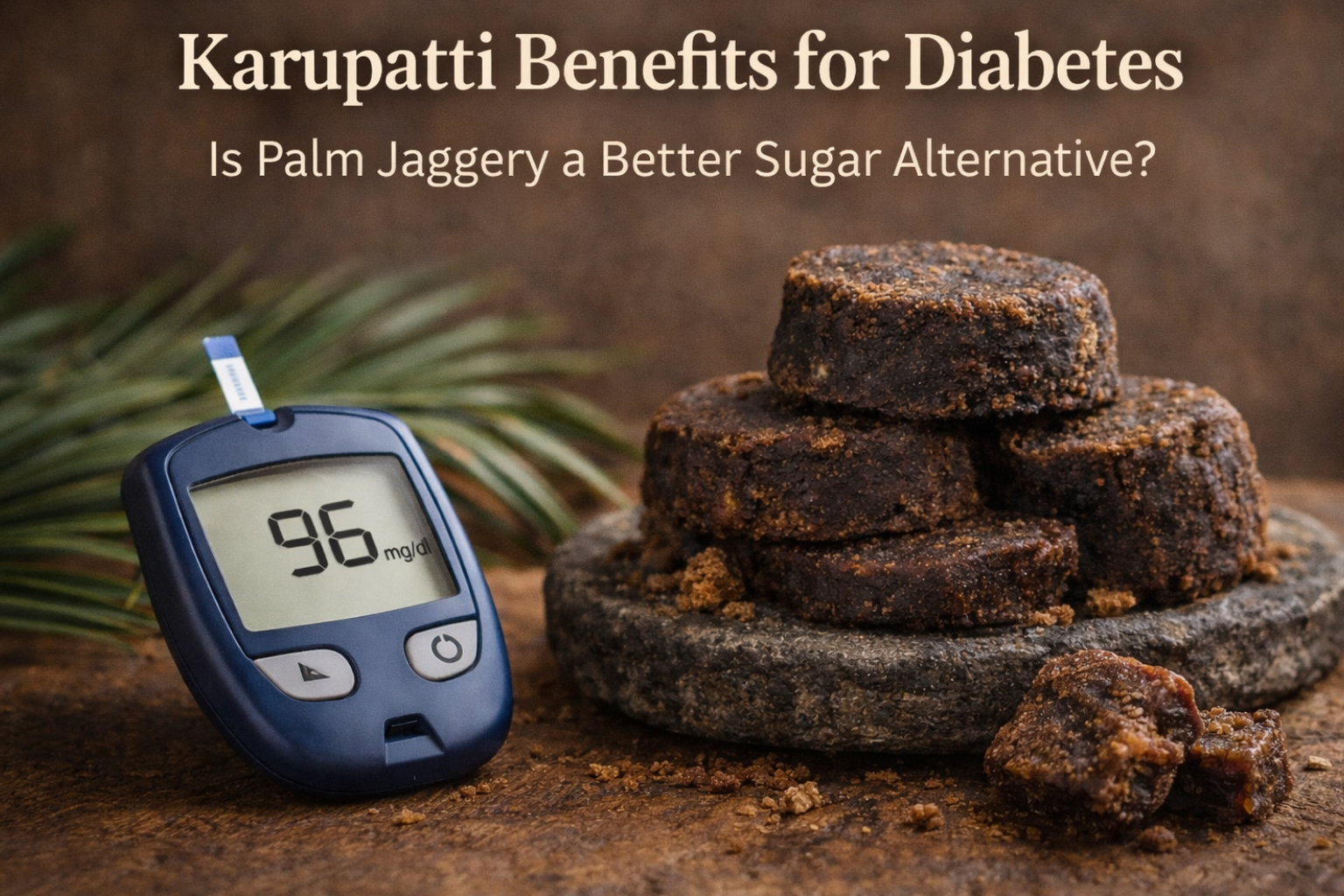
Diabetes has become one of the most common lifestyle conditions in the modern world. With rising awareness about health and nutrition, many people are looking for natural alternatives to refined sugar. One traditional sweetener that often comes into discussion is karupatti, also known as palm jaggery.
But is karupatti actually good for people with diabetes? Can it be used safely? Is it better than white sugar? In this detailed guide, we will explore the relationship between karupatti benefits and diabetes, its nutritional value, potential benefits, limitations, and the safest way to consume it.
This article aims to provide clarity based on nutrition science and traditional knowledge, while also emphasizing the importance of medical guidance.
What is Karupatti?
Karupatti is a traditional, unrefined sweetener made from the sap of palm trees. The sap is collected and slowly boiled until it thickens and solidifies into dark brown blocks. Unlike refined sugar, karupatti is not chemically processed or bleached.
It has been used for generations in South Indian households not only as a sweetener but also as part of traditional wellness practices.
Karupatti is known for its:
-
Rich, earthy flavor
-
Dark color
-
Traditional preparation method
-
Presence of small amounts of natural minerals
Because it is less processed than white sugar, many people consider it a healthier alternative. However, for individuals with diabetes, the situation requires a closer look.
Understanding Diabetes and Sugar Intake
Before discussing karupatti specifically, it is important to understand how diabetes works.
Diabetes is a condition where the body either does not produce enough insulin or cannot use insulin effectively. Insulin is the hormone that helps move sugar (glucose) from the bloodstream into the cells for energy.
When someone with diabetes consumes foods high in sugar or carbohydrates, their blood glucose levels can rise quickly. Over time, consistently high blood sugar can lead to serious complications affecting the heart, kidneys, nerves, and eyes.
Because of this, people with diabetes are usually advised to:
-
Limit simple sugars
-
Monitor carbohydrate intake
-
Choose foods with a lower glycemic impact
So the key question becomes: how does karupatti affect blood sugar compared to refined sugar?
Nutritional Composition of Karupatti
Karupatti is primarily made up of natural sugars, but it also contains small amounts of:
-
Iron
-
Calcium
-
Magnesium
-
Potassium
-
Trace antioxidants
These nutrients come from the palm sap and remain because karupatti is not heavily refined. In contrast, white sugar undergoes intense processing that removes almost all nutrients, leaving only sucrose.
Even though karupatti contains minerals, it is still calorie-dense and carbohydrate-rich. This means it can still raise blood sugar levels if consumed in large quantities.
Glycemic Impact: Karupatti vs White Sugar
The glycemic index (GI) measures how quickly a food raises blood sugar levels. Pure glucose has a GI of 100, and foods with a high GI cause rapid spikes in blood sugar.
White sugar has a high glycemic index, meaning it can quickly raise blood glucose levels. Karupatti is often believed to have a slightly lower glycemic impact because it is less processed and contains other compounds along with sugar.
However, karupatti is still largely composed of sucrose, glucose, and fructose. This means it is not a “free food” for diabetics and must be consumed with caution.
The difference is not that karupatti does not raise blood sugar. The difference is that it may be metabolized slightly more gradually compared to refined sugar due to its natural composition and trace minerals.
Potential Karupatti Benefits for Diabetes (When Used Carefully)
It is important to clarify that karupatti is not a cure or treatment for diabetes. However, when used in very small amounts under medical supervision, it may offer certain advantages over refined sugar.
1. Less Processing, Fewer Chemicals
Karupatti is traditionally prepared without bleaching agents or chemical refining. Some people prefer it because it is closer to its natural form. Reducing intake of highly processed foods is generally beneficial for overall health.
2. Presence of Trace Minerals
Karupatti contains small amounts of iron, magnesium, and potassium. These nutrients play roles in overall metabolism and body function. While the quantities are not high enough to replace a balanced diet, they are still better than the empty calories from white sugar.
3. Stronger Flavor Means Less Quantity
Karupatti has a deep, rich sweetness. Because of this, people often use smaller quantities compared to white sugar. Using less sweetener overall can help reduce total sugar intake, which is beneficial for blood sugar management.
4. Traditional Use in Herbal Drinks
In traditional practices, karupatti is sometimes added in small amounts to herbal drinks made with spices like dry ginger or pepper. These ingredients may support digestion and metabolism, though this does not cancel out the sugar content.
Important Reality: Karupatti Still Raises Blood Sugar
One of the biggest misconceptions is that karupatti is “safe” or “diabetes-friendly” in unlimited amounts. This is not true.
Karupatti:
-
Contains natural sugars
-
Has calories similar to other sweeteners
-
Can raise blood glucose levels
For someone with diabetes, any sweetener — natural or refined — must be used in moderation and included in the overall carbohydrate count for the day.
Replacing white sugar with karupatti does not mean blood sugar will stay normal if large quantities are consumed.
How Diabetics Can Use Karupatti Safely
If a person with diabetes wants to include karupatti occasionally, it should be done carefully and with guidance from a healthcare provider.
Here are some practical guidelines.
Use Very Small Quantities
Instead of teaspoons, think in terms of tiny portions. Even small amounts can contribute to daily carbohydrate intake.
Do Not Use Daily Without Monitoring
Regular consumption should only happen if blood sugar levels are being monitored and remain within the target range.
Avoid Combining with Other High-Carb Foods
Using karupatti along with refined flour sweets, white rice, or sugary drinks can cause a bigger blood sugar spike.
Prefer It with High-Fiber Meals
Pairing small amounts of karupatti with high-fiber foods may help slow sugar absorption compared to consuming it alone.
Always Consult a Doctor or Dietitian
Every diabetic person’s condition is different. What works for one person may not work for another.
Karupatti vs Artificial Sweeteners for Diabetes
Many diabetics use artificial or low-calorie sweeteners to control blood sugar. Compared to these, karupatti contains real sugars and calories.
Artificial sweeteners:
-
Usually do not raise blood sugar significantly
-
Contain little or no calories
Karupatti:
-
Is natural and unrefined
-
Contains calories and carbohydrates
-
Raises blood sugar if consumed in excess
The choice depends on personal preference, tolerance, and medical advice. Some people prefer natural options, but blood sugar control must remain the top priority.
Can Karupatti Prevent Diabetes Complications?
There is no scientific evidence that karupatti can prevent diabetes complications such as nerve damage, kidney disease, or heart problems. Good diabetes management depends on:
-
Controlled blood sugar
-
Regular exercise
-
Balanced diet
-
Medication if prescribed
-
Regular medical check-ups
Karupatti can only be seen as a potentially better sweetener choice compared to white sugar, not as a therapeutic solution.
Traditional Beliefs vs Modern Science
Traditional systems often regard karupatti as strengthening and nourishing. It has been used in home remedies for energy, digestion, and general wellness.
While these traditional beliefs highlight its value as a natural food, modern science emphasizes portion control and glycemic impact. For diabetes, scientific blood sugar monitoring is more important than tradition alone.
The best approach is to combine traditional wisdom with modern medical understanding.
Who Should Completely Avoid Karupatti?
Some individuals with diabetes may be advised to avoid all forms of sugar, including karupatti. This may include:
-
People with poorly controlled blood sugar
-
Individuals with frequent glucose spikes
-
Those with advanced diabetes complications
-
People advised to follow a very strict low-carb diet
In such cases, even natural sweeteners may not be appropriate.
Signs That Karupatti Is Affecting Your Blood Sugar
If someone with diabetes consumes karupatti and notices:
-
Unusual tiredness
-
Frequent urination
-
Increased thirst
-
Blurred vision
-
High glucometer readings
It may indicate that blood sugar levels are rising and intake should be reduced or stopped.
Balanced Conclusion: Is Karupatti Good for Diabetes?
Karupatti is a traditional, unrefined sweetener that contains small amounts of natural minerals and is less processed than white sugar. Because of this, it may be considered a better option than refined sugar in general diets.
However, for people with diabetes, karupatti is still a form of sugar. It can raise blood glucose levels and must be used with great caution. It is not a cure, treatment, or free food.
The key points to remember are:
-
Karupatti is more natural but still sugary
-
Small quantities may be better than refined sugar
-
Blood sugar monitoring is essential
-
Medical guidance is necessary
-
Moderation is the most important rule
Managing diabetes is about overall lifestyle, not just replacing one sweetener with another. A balanced diet, regular activity, and proper medical care are far more important than any single food item.
Disclaimer: This article is for informational purposes only and should not be considered medical advice. People with diabetes should always consult their doctor or a qualified dietitian before making changes to their diet, including the use of karupatti or any other sweetener.